In a land filled with centuries-old places of worship, each Sri Lankan temple, kovil, mosque or church still manage to stand out. Various factors contribute to this feat. The historical events that slowly became legends are something that stands out about one of these places of worship – the Somawathiya Stupa.

Don’t get me wrong. Stories-turned-legends are not the most important thing about Somawathiya. It has an enormous amount of historical and religious value.
But, for someone who has never heard about the temple, stories are a good place to start with!
A glimpse into the history of Somawathiya
From all accounts, Somawathiya Stupa dates all the way back to the second century BC. Around that time, there was a settlement called “Somapura” on the banks of the Mahaweli (the longest river in Sri Lanka). Somapura was home to the sister of one of the regional kings that ruled part of the island. At the request of this princess, her husband built a temple so that she can pay her respect to the Buddha.
This temple is what we now know as Somawathiya Stupa. According to historical records, it enshrines the right tooth relic of the Buddha. But of course, as with many other Sri Lankan temples, the original stupa is now not visible. In 164 AC, another king built a bigger temple around the smaller one from the second century BC. The relatively “new” stupa encases the old one in more than five feet of bricks, mud, and other building material of the time.
How historians misplaced the temple
Did you know that for over 800 years, no one knew whether the temple existed or not?
That’s because history tells us that the Somawathiya stupa sits on the eastern banks of the Mahaweli river. Yet, there was no temple to be seen in the area where it was supposed to be. For nearly a millennium, the puzzling mystery teased everyone.
And then, in the 1940s, archaeologists discovered that in the intervening time, the river had changed course. So now, the temple that used to sit on the eastern bank of Mahaweli is about half a kilometre to the west of the river. The sandy path that leads to the stupa is not a path at all, but the original river bed from 800 years ago.

How to reach the temple from Polonnaruwa
Somawathiya is about an hour away from the second oldest Sri Lankan kingdom. However, in the 21st century, Polonnaruwa is primarily famous for its collection of historical complexes, ruins and temples. So if you are in Polonnaruwa, it’s worth it to make a day out to visit the area. Not just to visit the temple. Another advantage is that the temple sits just within a pretty large national park. The stupa and the park, in fact, share the same name – Somawathiya.
- From Polonnaruwa, get on the 11 and head towards Janapada Mawatha. You will be passing the Venus Nursing Home on your right
- To your right, you will spot the Gajaba Mawatha, and you have to make the turn. It will take you to Janapada Mawatha
- At Kuruppu Junction, you will see the turning to the Somawathiya Road
- Drive on until you reach the designated vehicle parking lot. From there, the stupa is just a few feet away on foot
Somawathiya and its “miracles”

Somawathiya is a deeply spiritual place. Perhaps because it enshrines a sacred relic of the Buddha, Buddhists highly revere the site.
The area has a reputation for being a tad bit mysterious. Almost miraculous, one would say. Over the years, it has seen several incidents that have added to this reputation.
The mysterious illnesses and other calamities archaeologists experienced when they opened King Tut’s tomb are pretty well-known. However, the famous “King Tut’s Curse” can be explained away. It does make for an awesomely creepy story, though.
Well, something similar happened with Somawathiya as well. When people realised that one of Buddha’s tooth relics was enshrined within the stupa, the Diyawadana Nilame (Chief Lay Person) of the Temple of the Tooth Relic in Kandy paid the site a visit. His intention was to take the sacred relic and enshrine it safely in Kandy. However, the story goes on to say that the guide who escorted them became blind once they reached the temple grounds. The dig was hampered by two cobras and a swarm of wasps. Furthermore, while fleeing from the wasps, the Diyawadana Nilame suffered a wound, which ultimately caused his death.
Spooky enough to give King Tut’s Curse a run for its money, huh?
There are also stories of the stupa glowing with beams of light originating from an unidentified source. These incidents happen on religiously significant days.
Perhaps science can find explanations and cause-and-effects for the phenomenon. Until then, many Buddhists are content to believe that the temple grounds are sacred and holy.
The national park

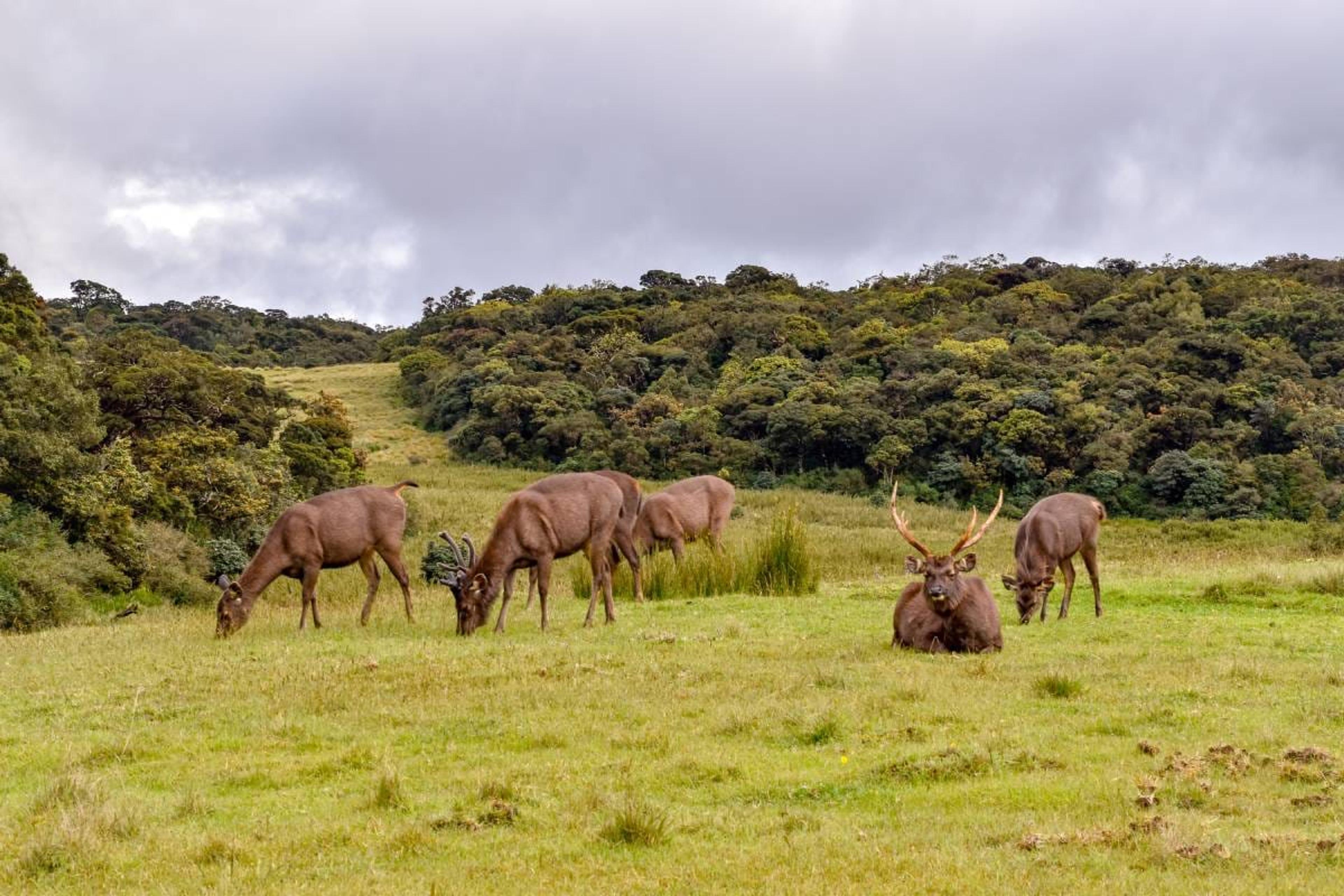
The former sanctuary became a national park in 1986. Somawathiya National park has a distinct habitat consisting of floodplains and riverine villus. An abundance of elephants makes it an absolute adventure to visit the park. In addition, visitors can keep their hopes up of spotting leopards, fishing cats, rusty-spotted cats, wild boar, sambar, and a host of other mammals.

Somawathiya National Park is also home to a range of birds. Aquatic birds, in particular, are easy to spot among its many villus and flood plains. During the winter months an estimated 75 species of avifauna flock to the park, making these months popular among bird lovers.