Sri Lanka stands out as one of Asia’s best destinations for wildlife lovers. Its compact size belies the extraordinary diversity that lies within. National parks are spread across the island. And each shelters a variety of safari animals that thrive in tropical forests, grasslands, wetlands and scrubland. What’s more, you don’t need to spend days in the wild to catch a glimpse of something unforgettable.

What makes Sri Lanka so exciting is that you can encounter majestic mammals, elusive predators, colourful birds and quirky primates, all within a single safari. These 10 safari animals will give you a taste of the wild magic that awaits.
Sri Lankan Leopard
Among Sri Lanka’s safari animals, the Sri Lankan leopard ranks as the most iconic. This apex predator moves with silent confidence, blending into the dry forests and rocky outcrops of the island’s national parks. Yala National Park boasts the highest leopard density in the world, making it one of the best places globally to spot a wild big cat.
Unlike their African cousins, Sri Lankan leopards face no competition from lions or hyenas. This makes them more relaxed and visible during the day. You might see one draped across a tree branch in the morning sun or pacing along a dusty track during an early drive. Each sighting feels unforgettable, and every glimpse reminds you why these safari animals draw photographers and travellers from all over the world.

Asian Elephant
No list of safari animals in Sri Lanka feels complete without the magnificent Asian elephant. These gentle giants appear across multiple national parks, often moving in matriarchal herds. Their sheer size and social behaviour make every encounter fascinating. Udawalawe offers guaranteed sightings throughout the year, but if you visit Minneriya during the dry season, you’ll witness one of Asia’s greatest wildlife spectacles, the Elephant Gathering.
Hundreds of elephants converge on the receding tanks to drink, graze and play. Calves splash in the water while adults throw dust onto their backs. The atmosphere turns magical at dusk, with golden light glinting off ivory tusks and flapping ears. Elephants stand among the most memorable safari animals for a reason – they move you, quietly and deeply

Sloth Bear
Though not as easy to find, the sloth bear adds a layer of mystery to Sri Lanka’s list of safari animals. These shaggy, black bears look comical at first glance, with long snouts and lolling tongues. But make no mistake; they move fast, climb trees with ease and carry powerful claws built for digging into termite mounds.
Your best chance of seeing one comes during the fruiting season when they emerge during daylight hours to feed. Wilpattu and Yala remain your top options, though sightings feel rare and special. Sloth bears often appear suddenly, lumbering across the road or vanishing into the brush. When you do see one, the encounter feels entirely different to spotting a leopard or elephant. It’s unpredictable, wild and entirely on the bear’s terms.

Mugger Crocodile
To be fair, Sri Lanka is home to two crocodile species: the saltwater and mugger. Of these two, however, you can more easily spot mugger crocodiles, not just during a safari, either. If you opt for a village tour in a remote area, there is the possibility of coming across a mugger crocodile near a river, stream or tank.
Thick-scaled, prehistoric and cold-eyed, these reptiles still pose a serious danger to unsuspecting prey. One minute, you would be gazing at a calm and still, if slightly muddy, body of water. The next minute, two eyes and a snout could emerge from the murky water, hinting at the hidden threat. It is possible to spot mugger crocodiles in many national parks, including Bundala, Yala, Kumana and Wasagamuwa. However, it is just as possible to see them in Arugam Bay, where you can even spot saltwater crocodiles near some popular surfing spots.

Spotted Deer
Spotted or axis deer, with their white spotted tan coats, are a delicate and graceful sight commonly seen within national parks. Since they tend to travel in herds, you can see large numbers of deer either grazing or loitering near a watering hole. However, these deer are also very agile and quick to alarm, so often, they would bound away as soon as they hear the sound of a vehicle.
Nevertheless, there are a few docile deer you can see near the national parks, including Minneriya, Wilpattuwa and Kaudulla. Or, if you travel to Trincomalee, you can even approach some spotted deer near Fort Frederick. While these deer are docile and used to humans, the herds you see within national parks are wilder and remain cautious. Even so, the presence of deer might be a sign that an apex predator, namely a leopard, is nearby. Therefore, it is always advisable to stay alert to your surroundings.

Sambar deer
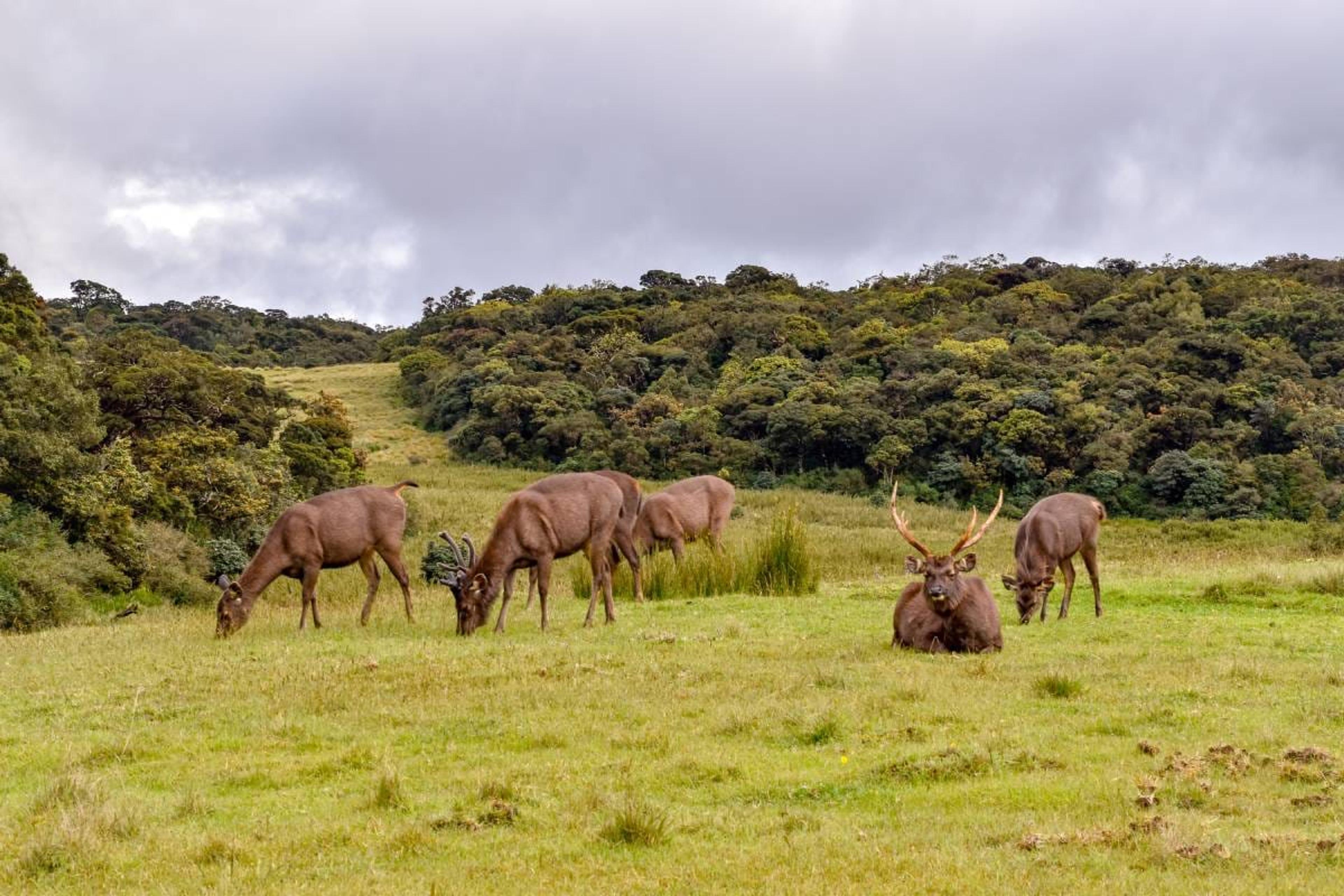
While the spotted deer brings elegance, the sambar deer represents power. These large, muscular safari animals have dark coats and impressive antlers. You’ll most often find them near forest clearings or close to streams, especially during cooler hours. Solitary males typically graze in silence, while females may appear with their young.
Horton Plains serves as a sanctuary for these shy giants. On misty mornings, you’ll see them standing still like statues, the fog curling around their thick fur. Their sharp bark alerts other animals when leopards lurk nearby. Though less flashy than leopards or elephants, sambar deer hold their own presence, calm, strong and deeply rooted in the island’s ecosystem.

Water Buffalo
Water buffaloes are among Sri Lanka’s underrated safari animals. Not as attention-grabbing as leopards or elephants, they are much humbler, although their tank-like build commands respect. While domestic water buffaloes are common in many agricultural-based villages, their wilder cousins living in national parks are far more impressive.
These animals thrive in wetland zones, where they move as herds and shape the landscape around them. You can observe them at close range in Wasgamuwa, Gal Oya and even around village tanks bordering national parks. Their curved horns, thick hides and deep-set eyes tell stories of survival. They may not grab attention like big cats do, but they remain essential to the country’s wild spaces.

Purple-Faced Langur
Among the lesser-known safari animals, the purple-faced langur reveals the island’s hidden richness. Endemic to Sri Lanka and endangered, these forest dwellers keep to the treetops, avoiding open spaces. Their thick fur, pale faces and expressive eyes give them a haunting charm, and their loud vocalisations echo through quiet valleys.
You’re most likely to spot them in Sinharaja or around the central highlands. Observing a langur troop move through the canopy feels like stepping into a nature documentary. They leap with ease, cling to branches and care for their young with human-like tenderness. They may not stay still for long, but even a brief sighting stays with you.

Toque Macaque
In sharp contrast to the langur’s reclusive nature, the toque macaque brings energy and mischief. These clever, noisy safari animals live in social groups, often right near roads or ruins. You’ll see them in Polonnaruwa, Dambulla and even within some resort grounds bordering national parks.
They scurry across roofs, dangle from power lines and sometimes swipe food when no one’s watching. Despite their cheeky antics, they remain a vital part of the local ecosystem. Watch their complex social behaviour – grooming rituals, pecking orders and maternal care. They may amuse you at first, but if you look closely, they reveal a deeper intelligence.

Crested Serpent Eagle
Safari animals don’t always walk or climb; some soar across the sky. The crested serpent eagle claims the skies and forest edges of Sri Lanka, hunting snakes, frogs and lizards. With a piercing cry and a wingspan that commands attention, this raptor adds dramatic flair to any safari outing.
Perch sightings often occur in Wilpattu and Wasgamuwa, where the eagle sits scanning the undergrowth. When it takes off, you’ll hear the rush of air as it climbs effortlessly into the canopy. Its eyes seem to miss nothing, and its presence marks the land as untamed. For bird lovers, this eagle ranks high among Sri Lanka’s must-see safari animals.


